How to Budget for Youth Sports in 2026: Registration, Gear, Travel, and Hidden Costs
Build a youth sports budget from the real fee sheet, calculate the full season total, and turn the remaining cost into monthly or per-paycheck funding.
Two registration pages show a combined price of $530. By the time one family adds uniforms, required gear, team fees, local travel, one clinic, and a replacement reserve, its fall sports target is $1,505.
That gives the short answer to how to budget for youth sports. Price the whole season from the program's current fee sheet and schedule, sort each cost by how certain it is, and put every payment on its real due date.
Use these two formulas:
season target = required costs + likely costs + selected optional costs + contingency reserve
remaining funding gap = max(0, season target - costs already paid - money already assigned - confirmed credits available before payment)
Then fund each dated payment from the paychecks or monthly income available before it. A season can fit the household's total plan and still create a cash shortage at registration.
The examples here are general budgeting and recordkeeping guidance. Prices, equipment rules, schedules, refunds, and assistance vary by program. Use the current documents from the league, school, club, or recreation department before paying.
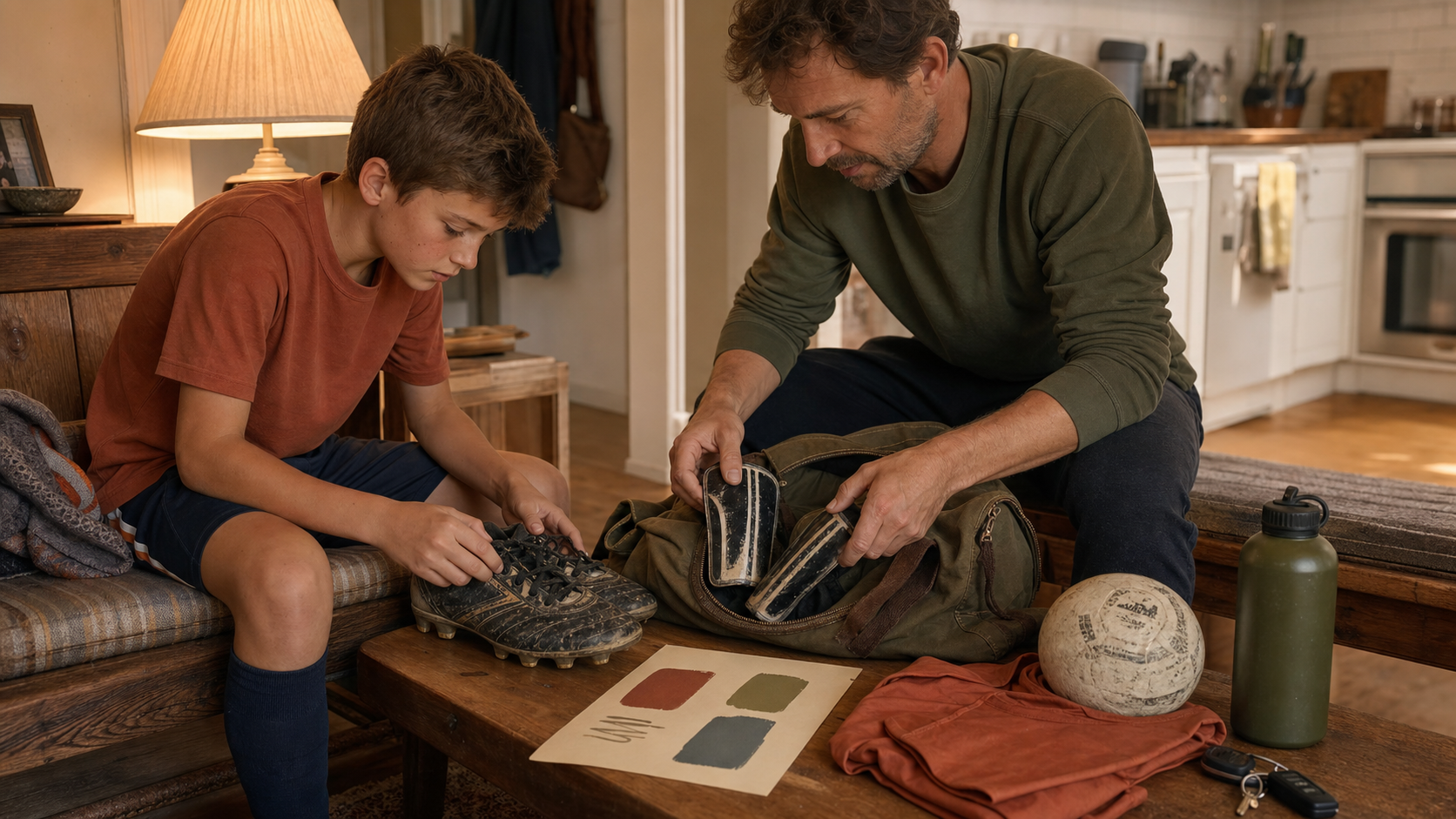
Build the youth sports budget from four cost groups
A registration fee is easy to see. The rest of the season tends to arrive through separate emails, team chats, store visits, and travel plans.
Keep four groups so a possible cost does not look as certain as a required one.
| Cost group | What belongs there | How to budget it |
|---|---|---|
| Required | Registration, mandatory uniform, required equipment, fixed team dues | Include the current quoted amount |
| Likely | Routine travel, parking, team snacks, known event fees, probable replacements | Estimate from the schedule and recent prices |
| Optional | Private lessons, extra camps, photos, merchandise, optional tournaments | Include only the options the household has chosen |
| Contingency | A broken item, a schedule change, extra travel, or another plausible surprise | Hold a clearly labeled reserve until it is used |
The labels can change as the season gets closer. An optional tournament becomes required spending only after the family commits and the payment cannot be avoided. A possible scholarship becomes available money only after the program confirms the amount.
The split keeps predictable costs in view without making every possible upgrade look unavoidable.
Price the season from the actual fee sheet and schedule
National averages can show that youth sports are expensive. They cannot price one child's season.
In its Project Play trends to watch in 2026, the Aspen Institute reports that the average U.S. sports family spent $1,016 on a child's primary sport in 2024, up 46% from 2019. The report points to registration, non-local travel and lodging, camps, and private instruction as cost drivers.
Use that figure as context only. A local recreation league and a travel team can have completely different costs. The useful number comes from the program being considered.
Collect:
- the current registration page and refund terms
- the uniform list, including which items can be reused
- the required equipment list
- the practice, game, and tournament schedule
- team dues and known event fees
- transport, parking, and lodging prices for the actual locations
- the expected replacement date for items children may outgrow
Ask the program which costs are mandatory before buying anything. A premium bat, a second uniform, or private coaching may be common on one team without being required.
The Consumer Financial Protection Bureau's spending assessment recommends checking several months of bank and credit card history and including less frequent seasonal and recreational costs. If the household paid for a previous season, use that history to find the parking, food, travel, and replacement purchases that the registration page missed.
A complete youth sports budget example
The Rivera family is planning one fall soccer season for Ava and one fall baseball season for Milo. The amounts are hypothetical, but every line has a clear job.
| Cost | Calculation | Group | Amount |
|---|---|---|---|
| Registration | $240 soccer + $290 baseball | Required | $530 |
| Uniforms | $85 soccer + $75 baseball | Required | $160 |
| Required gear | $125 soccer + $155 baseball | Required | $280 |
| Team and snack fees | Two team estimates | Likely | $95 |
| Local travel | Practices, games, parking, and two regional event days | Likely | $180 |
| October clinic | One clinic the family has selected | Optional | $160 |
| Replacement reserve | One plausible in-season replacement | Contingency | $100 |
| Season target | $1,505 |
The family already has $305 assigned to fall sports:
$1,505 season target - $305 already assigned = $1,200 new money needed
The $100 contingency reserve is not an expense yet. If nothing breaks and travel does not change, it remains available after the season. Reporting it as spending before it is used would overstate the real cost.
The family also owns a cooler, folding chairs, and a reusable water container. Those shared items cost $0 in this plan. Listing them as owned is useful; buying them twice is not.
Separate each child's costs from shared household costs
For two or more children, build one section per child and one section for shared costs.
household season target = total child-specific costs + shared household costs counted once
Child-specific lines usually include:
- registration
- uniforms
- shoes or skates in the correct size
- protective equipment
- lessons or camps chosen for that child
- individual team or event fees
Shared lines can include:
- one family trip to the same venue
- parking for one vehicle
- a cooler or shade tent used across teams
- equipment that the program permits siblings to reuse
- family lodging for one tournament
Do not split a shared cost into two full expenses. If one $20 parking charge covers both children's events, the household spent $20, not $40.
The opposite mistake is assuming that all gear can be shared. Size, fit, safety requirements, schedule conflicts, and program rules may make an item child-specific. Confirm before reducing the budget.
If two adults manage the season together, a shared household budget can keep each child's costs visible without mixing them with personal spending.
Turn the season total into a payment calendar
The Rivera family's $1,200 funding gap looks like $300 per month across July through October. That average hides the first problem: $530 of registration is due on July 25.
They put every cost on a calendar:
| Due date | Payment or reserve milestone | Amount |
|---|---|---|
| July 25 | Two registrations | $530 |
| August 22 | Uniforms and required gear | $440 |
| September 5 | Team fees and the first part of local travel | $155 |
| October 3 | Remaining local travel and the selected clinic | $280 |
| October 17 | Complete the replacement reserve | $100 |
| Total | $1,505 |
The September payment contains the $95 team estimate and $60 of local travel. The October payment contains the remaining $120 of travel and the $160 clinic. That keeps the same $180 travel target visible rather than creating a second travel estimate later.
Put known deadlines beside normal household bills. How to Use a Bill Calendar for Budgeting in 2026 explains the broader due-date workflow.
Fund the calendar by paycheck or by month
For each payment, count only income dates before the due date:
allocation per paycheck = remaining amount for the payment / paychecks before the due date
The Rivera family has $305 saved and receives biweekly pay on July 24, August 7, August 21, September 4, September 18, October 2, and October 16.
Their allocations are:
| Pay date | Sports allocation | Job |
|---|---|---|
| Money already assigned | $305 | Part of July registration |
| July 24 | $225 | Completes the $530 registration payment |
| August 7 | $220 | First half of uniforms and gear |
| August 21 | $220 | Second half of uniforms and gear |
| September 4 | $155 | Team fees and first travel amount |
| September 18 | $140 | Half of the October payment |
| October 2 | $140 | Completes the October payment |
| October 16 | $100 | Completes the replacement reserve |
| Total available for the season | $1,505 |
The arithmetic closes:
$305 already assigned + $1,200 from paychecks = $1,505
The same plan expressed by month is $225 of new money in July, $440 in August, $295 in September, and $240 in October. It is uneven because the payment dates are uneven.
If the allocation required before a due date does not fit, the calendar has found a real gap. The household can change an uncommitted optional cost, ask the program about a documented payment schedule, choose another program, or move the start date for a future activity. Dividing the total by more months does not fix a payment due next week.
For a season several months away, keep the planned money separate from other jobs. How to Track Sinking Funds in 2026 covers the recordkeeping. An annual budget helps when different sports repeat across the year.
Build travel from the schedule, not the registration page
A practical travel sports budget starts with dates and locations.
For each event, estimate:
- fuel, charging, fares, tolls, and parking
- lodging price, taxes, and number of nights
- meals above ordinary household food spending
- baggage or equipment transport
- local transport at the destination
- care for children or pets not traveling
Do not subtract the normal grocery budget automatically. Subtract only ordinary spending that will genuinely be avoided during the trip. Rent, subscriptions, and most household bills continue while the family is away.
For local seasons, small trips can still add up. The Rivera family estimates ten ordinary practice or game trips at $12 each, including fuel and occasional parking, plus two regional event days at $30 each:
(10 trips × $12) + (2 event days × $30) = $180
If the schedule changes, update the remaining travel target. How to Budget for Higher Gas Prices in 2026 has a fuel calculation for households whose driving costs move often.
For an overnight event, keep the tournament travel lines separate from registration. A team fee does not tell the family what a hotel, meals, and transport will cost.
Count fundraising, refunds, and reimbursements only when confirmed
Possible money does not fund a payment.
Use these rules:
| Event | Budget treatment |
|---|---|
| Scholarship or fee waiver approved in writing | Reduce the relevant cost by the confirmed amount |
| Assistance application still pending | Keep the full cost in the plan |
| Fundraiser target announced | Do not count it as household money |
| Team credit confirmed after fundraising | Reduce the named team cost when the credit is documented |
| Merchant or program refund pending | Keep it pending until it posts |
| Another parent has not yet repaid a shared purchase | Fund the full payment and track the reimbursement separately |
A fundraiser can also create household spending. Supplies bought for an event, a required contribution, or travel to the fundraiser belongs in the budget unless the team covers it.
Suppose the Rivera family pays a $90 group order and another parent owes $35. The account still needs enough cash for the full $90 payment. When the $35 arrives, record it as a reimbursement tied to that purchase. Do not call the $35 new income and do not reduce the account balance before it arrives.
How to Track Reimbursable Expenses in 2026 covers this workflow in more detail. For a cancellation, read the program's current refund terms; registration fees and deposits do not all behave the same way.
Review actual costs before planning the next season
Close the season with the real numbers while the details are still easy to find.
This follows Consumer.gov's basic budget cycle: make a plan, record what was spent, compare the result with the plan, and use the result for the next budget. For youth sports, run that cycle across the full season as well as each month.
Compare plan with actual:
| Review line | Planned | Actual | Difference |
|---|---|---|---|
| Registration | |||
| Uniforms | |||
| Equipment | |||
| Team and event fees | |||
| Travel | |||
| Lessons and camps | |||
| Reimbursements and refunds | |||
| Contingency used |
Then record three decisions:
- which costs will repeat next season
- which equipment can be reused and when it may need replacement
- how many months or paychecks are available before the next registration deadline
If the Rivera family's final cost is $1,420 because the $100 reserve covers a $15 replacement and $85 remains, the actual season cost is $1,420. The unused $85 can stay assigned to the next season or receive another explicit budget job.
The next target should use the actual season as evidence, adjusted for known changes. It should not copy the original estimate unchanged.
Where Expense Budget Tracker fits
Expense Budget Tracker can keep the plan and the season's transactions in the same place:
- set monthly planned amounts for registration, equipment, and travel categories, then compare them with ledger-derived actuals
- record income, expenses, and transfers as manual ledger entries
- move money between the household's own accounts as a transfer, not another sports expense
- review ledger-derived account balances and category totals on dashboards
- use a shared workspace when more than one adult manages the plan
- add budget-cell comments that explain a team fee, schedule change, or reimbursement
The product does not connect to a league, confirm equipment requirements, store receipts, approve assistance, move money into a sinking fund automatically, or provide automatic bank sync. Its job here is to show what the household planned, what it paid, where the money moved, and what remains.
The getting started guide covers the basic setup.
Youth sports budget FAQ
How much do youth sports cost?
There is no reliable universal amount. Current program fees, required equipment, the event schedule, travel distance, and selected extras determine the household's cost. The Project Play average provides national context, not a target for one family.
How much should I save each month for youth sports?
Subtract money already assigned from the full season target. Then divide each remaining payment by the months or paychecks before its due date. Use those dated amounts in the monthly budget instead of one average that may arrive too late.
Should travel have its own budget line?
Yes when combining travel with registration would hide when or where the cash is needed. Separate transport, lodging, meals above ordinary spending, parking, and equipment transport. This makes schedule changes easier to price.
What happens to an unused contingency reserve?
It remains unspent money. Keep it for the next season or assign it another clear job. Do not report the whole reserve as an expense when only part of it was used.
Should a pending refund reduce the sports budget?
No. Keep the original payment and the expected refund visible until the refund posts. Then record the refund against the original cost without counting it as unrelated income.
The practical rule for the next season
A useful youth sports budget starts with the full season, not the registration screen.
List required, likely, selected optional, and contingency costs. Put each payment on its due date. Subtract only money already assigned or confirmed assistance. Fund the remaining dates from income that arrives before them, and compare the final actual cost with the plan.
That gives the next season a real starting number instead of another surprise after registration.