Should I Buy Before Prices Go Up in 2026? A Practical Budget Rule for Tariffs, Bulk Buying, and Big Purchases
Trying to decide whether to buy now before prices rise in 2026? Use a practical budget rule for tariffs, pantry basics, household goods, appliances, and other purchases without drifting into panic spending.
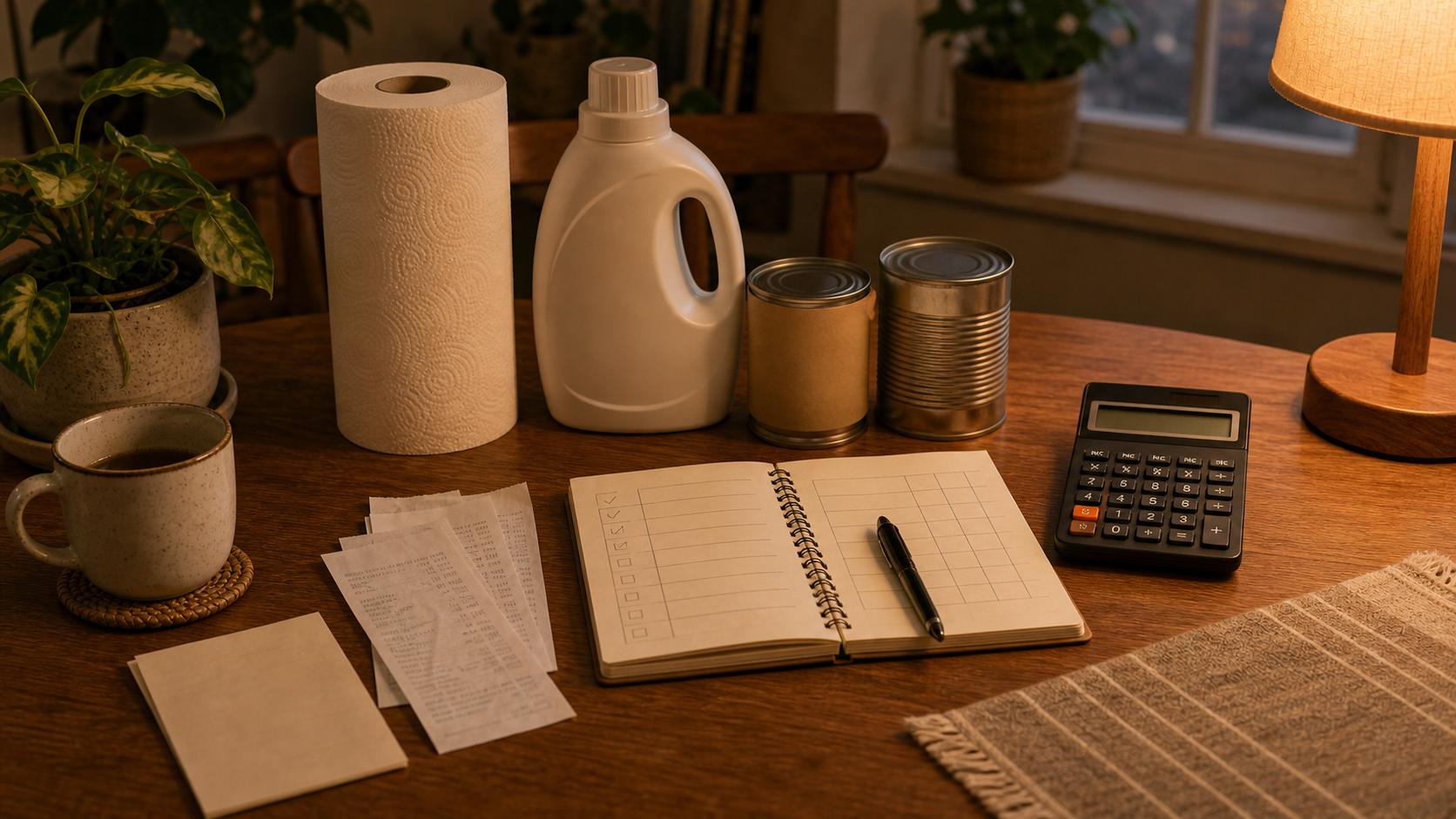
At Costco last week, I watched a couple spend five minutes debating a second pack of paper towels. One of them had read another tariff headline. The other kept asking the only question that matters in these moments: are we buying early because it saves money, or because the news made us jumpy?
That is the real 2026 version of this problem. Plenty of households are not wondering whether prices feel high in general. They are trying to decide whether to stock up now, replace a dying appliance a little early, or leave the cart alone and keep the month stable.
There is a useful middle ground between panic-buying and pretending price changes do not matter. If you are searching should I buy before prices go up, the budget answer is simple enough to use tonight: buy early only when the purchase was already coming, the timing is close enough to matter, and the cash can handle it without stealing from essentials.
This is budgeting guidance, not financial, legal, or tax advice.
Why this question got louder in 2026
People are not imagining the pressure.
Gallup reported in April 2026 that high cost of living and inflation remained Americans' top financial problem, with energy costs and housing costs close behind. The Budget Lab at Yale estimated on April 8, 2026 that the current tariff regime implies a short-run consumer price increase of about 0.7% to 1.1%, depending on whether scheduled tariffs expire.
Households have also started behaving accordingly. Deloitte wrote in its tariff spending analysis that consumers who expect higher prices are likely to front-load goods purchases, especially durable items. That tracks with real-life behavior: replacing the laptop now, buying the air conditioner before it fully dies, adding one extra month of household supplies to the cart.
The important part is that price pressure is uneven. USDA's June 2026 Food Price Outlook said food prices in May 2026 were 3.1% higher than a year earlier, with food away from home up 3.5% and groceries up 2.7%. The same update showed some categories moving a lot more than others, including fresh vegetables. The Bureau of Labor Statistics said in its May 2026 CPI release that electricity was up 5.9% year over year, while food was up 3.1% and apparel was up 4.8%.
That is why blanket advice like "buy everything now" is usually bad budgeting. Tariffs, inflation, and category-specific jumps do not land evenly. Some items are climbing. Some are volatile. Some are not worth storing. The budget needs a filter.
Buy early only if the purchase passes three tests
Use three plain tests before moving any purchase forward.
1. It was already on your list
If the item only became urgent after you saw a headline, slow down.
Good candidates:
- the dishwasher that is already failing
- the kid shoes you know will be needed before school starts
- pantry or household basics you buy every month anyway
- the laptop charger, phone battery, or small home item you already planned to replace
Weak candidates:
- decor you were vaguely thinking about
- a "backup" version of something you rarely use
- a bigger package size that only looks cheaper because it is bigger
- impulse bulk buying with no clear use window
If the purchase was not already coming, you are probably responding to anxiety instead of price math.
2. The timing is short enough to be real
People get themselves into trouble by pulling six or twelve months of spending into one stressed weekend.
For routine household items, I would usually cap advance buying at one to three months. That is enough to use the lower current price if it is real, without turning the budget into a storage project.
For bigger replacement purchases, a slightly longer window can make sense. Buying a refrigerator or laptop a month or two early is one thing. Buying it a year early because prices might go up is something else entirely. The avoided increase has to compete with storage, warranty timing, the chance of a better sale later, and the fact that the cash leaves your account now.
3. The cash is already there
This is the line people step over when a sensible stock-up turns into next month's problem.
If buying early means:
- skipping rent buffer
- shrinking the grocery budget below what you actually need
- leaning harder on a credit card balance
- delaying a bill that was already tight
then the purchase is not saving you money. It is moving pressure around.
If credit cards are already carrying part of the month, read How to Get Off the Credit Card Float in 2026 before you call a bulk purchase "smart planning."
What usually is worth buying early
There are two buckets that make sense most often.
Predictable household basics
This is the calmer version of stocking up:
- detergent
- diapers
- pet food you know gets used consistently
- paper goods
- toiletries
- shelf-stable pantry basics you already buy on repeat
- replacement filters, bulbs, or other boring home consumables
These items work well because your usage is knowable. You are not guessing whether you will need them. You are deciding whether it is worth pulling forward one or two future purchases.
The clean rule is:
buy only the amount you would normally use in the next 60 to 90 days
That keeps the decision practical. You are not becoming your own warehouse. You are just using timing on purpose.
Necessary replacement purchases
This is where the question gets more expensive and more emotional.
Think:
- a washing machine making the bad noise
- a phone battery that no longer lasts the workday
- a window AC unit you will need before the hottest part of summer
- a car repair item or home tool you already know is not optional
Here I would compare four numbers:
- current price
- likely purchase month if you wait
- realistic price increase risk by then
- what that cash needs to do if you buy now
If waiting probably saves nothing and raises the chance that the purchase lands in a worse month, buying now can be the better budget move. If buying now means financing a purchase you otherwise would have paid in cash later, the advantage disappears fast.
What usually is not worth stocking up on
This part matters just as much.
I would avoid early buying when the item is:
- perishable or easy to waste
- driven mostly by trend fear instead of a known need
- hard to store, return, or transport
- large enough to create a cash squeeze
- something you are trying to "save money" on by buying a more expensive version than usual
Food is the classic trap here. Broad food inflation is real, but category behavior is messy. USDA's latest food outlook shows some retail food categories rising sharply while others are falling or normalizing. That is a reason to budget groceries better, not a reason to fill the garage with random snacks.
If rising everyday costs are the bigger issue, How to Budget for Price Increases in 2026 and How to Calculate Your True Monthly Expenses in 2026 are the better companion reads.
A budget rule you can use tonight
Here is the simplest version I trust:
Buy early only if all four of these are true:
- you were already going to buy it
- you will use it within 90 days, or it is a clearly necessary replacement purchase
- you can pay for it from existing cash or a dedicated sinking fund
- buying now does not reduce your ability to cover essentials before the next paycheck
That is the whole rule.
It works because it blocks the two failure modes that make these decisions expensive:
- fake urgency
- fake affordability
Fake urgency turns ordinary shopping into panic spending. Fake affordability turns a good deal into a cash-flow problem.
A quick way to run the math
If you want a slightly more concrete check, use this worksheet:
| Question | Example answer |
|---|---|
| What item am I thinking about? | Detergent, AC unit, laptop charger |
| Was it already planned? | Yes or no |
| When will I realistically need it? | 2 weeks, 2 months, 5 months |
| What is the current price? | $84 |
| What is the likely price later? | $92 to $98 |
| What cash category pays for it? | Household, sinking fund, replacement fund |
| Does buying now hurt bills or groceries? | Yes or no |
If you cannot answer the last two lines cleanly, pause.
Most "buy now or wait" decisions are not blocked by the price forecast. They are blocked by the fact that the category is not funded yet.
That is a budgeting problem first.
If you already use sinking funds for uneven spending, this fits neatly into the same structure. If you do not, How to Track Sinking Funds in 2026 is the next article I would read.
Treat bulk buying and big purchases differently
People often lump these together because both feel like "buying early." The budget should not treat them the same.
Bulk buying
Bulk buying is mostly a category timing decision.
You are moving forward normal spending on things you already consume. The risks are overbuying, clutter, and tying up cash you needed elsewhere.
Big purchases
Big purchases are cash-flow decisions.
You are deciding whether to commit a larger amount now in exchange for avoiding future price pressure, supply problems, or a worse month later. The risks are bigger: financing costs, lost buffer, and the possibility that the purchase was not actually urgent.
If the amount is big enough to affect the rest of the month, I would give it its own budget line instead of letting it blur into shopping.
Do not let a stock-up hide a baseline problem
This is the part that sneaks up on people.
If you keep feeling the urge to buy ahead because every category looks more expensive, the real issue may be that your monthly baseline is stale. One successful Costco trip will not fix a budget that is permanently underestimating food, utilities, household basics, or school spending.
BLS and USDA are both pointing to the same broader reality in mid-2026: price pressure is still active, but it is not evenly distributed. That usually calls for better category numbers, not permanent emergency shopping behavior.
If electricity, fuel, and summer household costs are the categories drifting, the more durable fix is to reprice the month and update the plan. How to Budget for Utilities in 2026, How to Budget for Higher Gas Prices in 2026, and How to Do a Spending Audit in 2026 are more useful than another panic run for paper goods.
Where Expense Budget Tracker helps
This kind of decision is easier when the budget shows timing and cash clearly instead of just category totals.
Expense Budget Tracker is useful here for a few practical reasons:
- you can keep a separate category for bulk household purchases instead of letting them distort groceries
- the budget grid shows planned versus actual spending, which makes it easier to see whether a stock-up really saved money or just pulled spending forward
- future months and sinking-fund categories make it easier to hold a replacement purchase without hiding it inside routine shopping
- balance tracking helps answer the uncomfortable question that matters most: can I buy this now without making the next bill window tighter
- transfers between your own accounts stay separate from spending, so moving cash into a replacement fund does not muddy the month
That is the real value here. The tool helps you tell the difference between a deliberate buy-ahead move and an anxious one, and it makes the tradeoff visible before you hit checkout.
The product details are on the features page, and the setup flow is in the getting started guide.
The default answer
If you want one default answer to should I buy before prices go up, use this:
Buy a little early when the item is already planned, easy to use soon, and fully covered by today's cash.
Wait when the purchase is vague, oversized, or funded by money the rest of the month still needs.
That rule is not flashy, but it holds up well in 2026. It gives you a way to respond to real price pressure without turning the budget into a running argument with headlines.