How to Budget for Higher Electric Bills in 2026: Summer AC Costs, Rate Increases, and Bill Shock
Need a practical way to budget for higher electric bills in 2026? Here is how to separate rate increases from hotter-weather usage, build a summer cooling buffer, and absorb one bad bill without wrecking the rest of the month.
The electric bill was $146 in April, $158 in May, and then $289 lands in July. Same apartment. Same paycheck. Same groceries. But now the AC is running harder, the utility may have raised rates, and the month suddenly needs a new plan.
That is usually when people start searching how to budget for higher electric bills, why is my electric bill so high, or how to pay a high electric bill.
This got more relevant in 2026. The Bureau of Labor Statistics said the electricity index was up 5.9% over the 12 months ending in May 2026. The U.S. Energy Information Administration's June 9, 2026 Short-Term Energy Outlook forecasts average U.S. residential electricity prices at 18.2 cents per kilowatthour in 2026, up from 17.3 in 2025, and assumes 3% more cooling degree days from June through September this year. The Urban Institute's American Affordability Tracker says residential electricity costs have increased faster than earnings across much of the country, leaving households paying about $40 more in December 2025 on average than in December 2017. And in a June 2026 update, NEADA projected that the average U.S. household would spend about $792 on electricity this summer, up 10.5% from 2025.
So if your electric bill suddenly feels like a second rent payment, that is not you being bad at budgeting.
This is budgeting guidance only, not financial, legal, tax, or utility-service advice.
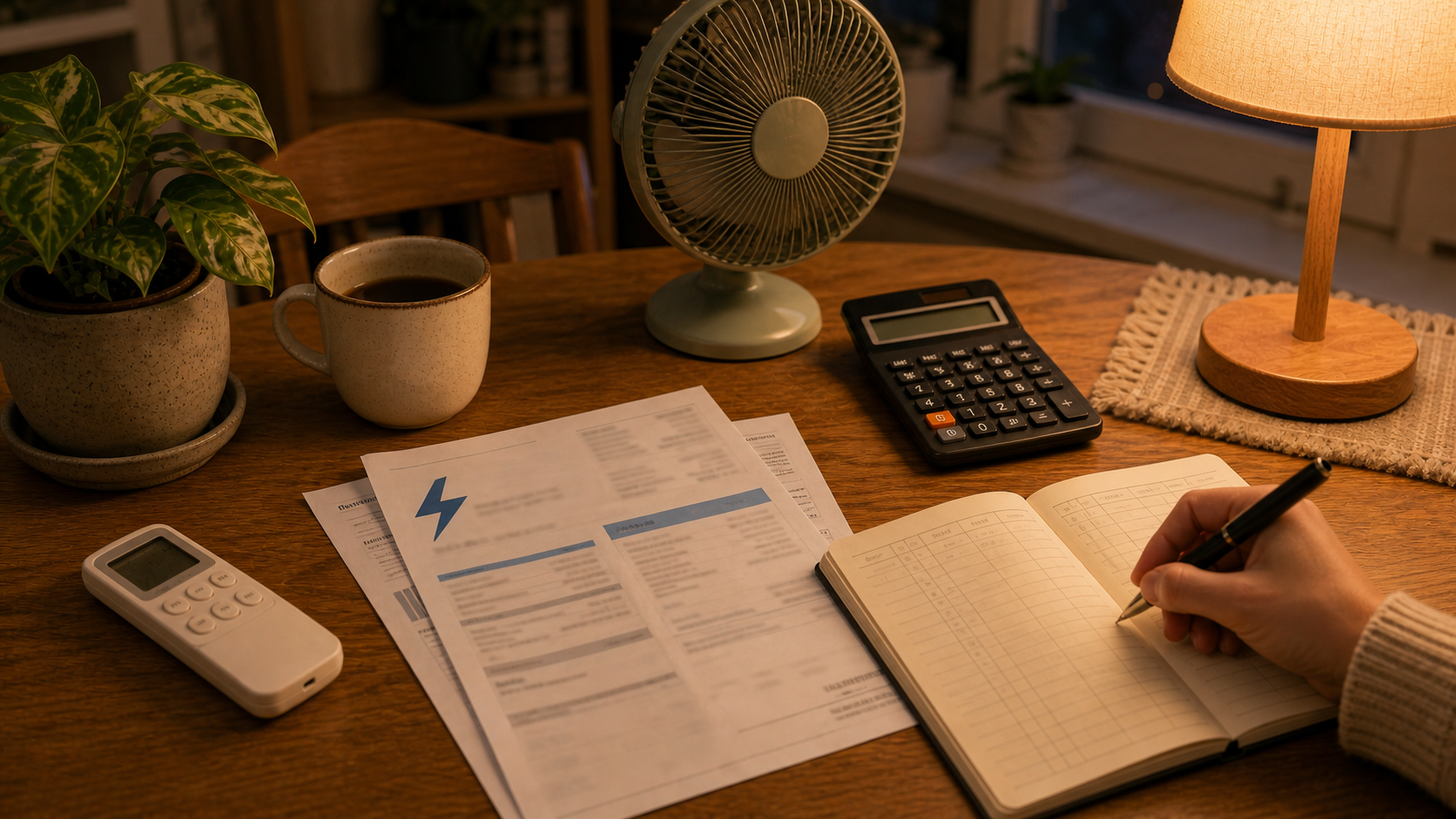
First decide whether this is a one-bill problem or a new normal
If you get this part right, the rest gets simpler.
A high electric bill can mean three different things:
| What changed | What it usually means | Budget move |
|---|---|---|
| One unusually hot month | Temporary spike | Cover the gap without permanently raising the category too much |
| Your rates or plan changed | New baseline | Raise the monthly electric category going forward |
| Both happened at once | Seasonal spike on top of a higher baseline | Raise the category and build a summer buffer |
The mistake is treating all three situations the same way.
If July was a heat-wave month but your usual electric bill is still manageable, you need a short-term response.
If the utility changed the rate plan or fixed charges and the bill is now structurally higher, you need a new monthly number.
If both happened, which is pretty normal in 2026, calling it a fluke usually just delays the same stress until next month.
Split the bill into usage, rate, and timing
Do not budget from the total alone, especially when the jump feels sudden.
Pull the current bill and the last two or three bills. Look at:
- total kilowatt-hours used
- price per kilowatt-hour or supply-rate line
- fixed charges, delivery charges, or riders
- due date and any late fees or catch-up adjustments
That will usually tell you what kind of problem you actually have.
If usage stayed close to normal but the bill jumped, the issue may be rates, fees, or a different plan structure.
If the price looks similar but kilowatt-hours jumped, the issue is mostly cooling demand or a home-usage change.
If part of the bill is late fees, a deposit adjustment, or the end of a budget-billing arrangement, that is a timing problem sitting on top of the energy problem.
This matters because the budget response is different:
- a rate problem means the category target needs to go up
- a usage problem may need a seasonal buffer
- a timing problem may need checking-account protection and calendar cleanup
If the timing side is what keeps causing damage, read How to Use a Bill Calendar for Budgeting in 2026 and How to Avoid Overdraft Fees in 2026. Those two articles help with the account-collision part of the problem. This one stays on the electric-bill math.
Build a summer cooling buffer instead of trusting the annual average
The broad utilities article on this site covers the full-household version of the problem: How to Budget for Utilities in 2026.
Electricity is worth its own article because summer cooling can move faster than the rest of the utility stack.
A simple way to budget electricity is to use two layers:
- a normal monthly electric target
- a summer cooling buffer
Here is a plain way to calculate it:
- pull last year's June through September electric bills if you have them
- find the average for those high months
- compare that with your lower-season monthly average
- budget the difference as a temporary summer add-on
Example:
| Period | Average electric bill |
|---|---|
| October through May | $148 |
| June through September | $236 |
| Summer difference | $88 |
That household does not really have a $148 electric category in summer.
It has a $148 baseline plus an $88 seasonal job.
So the working summer electric target is about $236.
That is much more useful than saying "utilities average out over the year" and then getting blindsided every July.
If several categories are rising with the weather at the same time, How to Budget for Price Increases in 2026 is the broader reset.
If you are on time-of-use pricing, budget by hour band, not only by total bill
This is where electricity gets more specific than most other utilities.
A lot of people do not just pay for how much power they use. They also pay different prices depending on when they use it.
That means two households can use similar total electricity and still land very different bills.
If your utility uses time-of-use pricing, look for:
- on-peak hours
- off-peak hours
- super off-peak or overnight hours
- demand charges, if your plan has them
For a time of use electricity budget, do not only raise the electric category and hope for the best. Move the easiest flexible usage first:
- laundry and dishwasher cycles
- electric-vehicle charging
- pool pumps
- heavy cooking or baking on the hottest late-afternoon hours if your plan punishes that window
You do not need to redesign your life around the utility.
You do want to know whether the expensive part of the bill is mostly "how much power" or "which hours."
That difference can matter a lot more than one round of turning off lights and hoping for the best.
Do not turn the house into a punishment to save the category
Some advice on high electric bills gets weird fast.
Yes, you should check the practical stuff:
- replace a clogged HVAC filter
- close blinds or curtains during the hottest part of the day
- keep doors and windows closed when the AC is working
- use fans where they actually reduce AC load
- lower obvious waste from spare rooms, garage fridges, or always-on devices
But the goal is not to turn the house into a punishment box.
If the home is dangerously hot, if a child, older adult, or someone with health issues lives there, or if you simply need to keep the place functional for normal life, the budget has to respect that reality.
The better move is usually:
- make the easy usage cuts
- build the category honestly
- protect the paying account
- use payment-plan or assistance options early if the bill is not affordable
That last point matters. If the bill is too large to handle, contact the utility before the due date. A payment arrangement is a budgeting tool. A late notice is not.
What to do when the high electric bill already landed
This is the real emergency version.
The bill is here. The due date is close. You do not have three months to clean this up gradually.
Handle that month in this order:
- confirm the exact amount due and due date
- decide whether the full bill can be paid from current cash without missing essentials
- if not, call the utility before the due date and ask about a payment arrangement
- cut flexible spending in the current month
- pause non-urgent sinking-fund contributions if necessary
- keep the catch-up visible as its own budget move
That last step matters because people often hide the fix inside vague category shrinkage and then learn nothing from the month.
Label the move plainly:
electric bill catch-upsummer cooling gaputility payment plan
That makes the next review much easier.
If the month is already tight enough that one big bill threatens the rest of the basics, How to Make a Bare-Bones Budget in 2026 is the better companion article. If you mainly need to know what is still safe to spend before the next paycheck, use How Much Can I Spend This Week in 2026.
A simple higher-electric-bill budget example
Suppose your usual electric category is $155.
Now July arrives:
- actual bill due:
$284 - usual bill:
$155 - gap:
$129
You review the statements and find:
- about
$70of the increase looks seasonal and likely to repeat in August - about
$59was a one-month spike from heavier AC use during a brutal week
That gives you a much cleaner plan:
| Job | Amount | What to do |
|---|---|---|
| Raise monthly electric target for summer | $70 | Add this to July and August planning |
| Cover one-time spike | $59 | Absorb in the current month without assuming it repeats forever |
Now imagine the current month has room for only $35 of that one-time spike.
You might handle it like this:
| Source | Amount |
|---|---|
| Cut restaurant spending | $25 |
| Cut discretionary shopping | $20 |
| Pull from a non-urgent sinking fund | $14 |
| Total | $59 |
That is an electric-bill fix.
It is a lot cleaner than paying the bill from whichever account still has money and then wondering why August feels thin before it starts.
Watch for the quiet reasons the bill changed
Sometimes the electric bill rises because of heat. Sometimes heat just exposes a change that was already there.
Look for these before calling the new number "normal":
- a different rate plan
- an expired promo or supplier change
- someone working from home more often
- a new portable AC, dehumidifier, or second fridge
- electric-vehicle charging at expensive hours
- a recent move to a less efficient home
If the bill keeps hitting from multiple accounts, or one person pays the utility while another handles rent and groceries, How to Budget With Multiple Bank Accounts in 2026 is the right cleanup guide. If the category and account balances no longer agree, read How to Reconcile Your Budget With Your Bank Balance in 2026.
Where Expense Budget Tracker fits
Expense Budget Tracker helps here because a high electric bill is rarely just one number.
The practical job is to keep four things visible at once:
- the planned electric category for this month
- the actual bill that posted
- the balance in the account that has to pay it
- whether the higher amount is temporary or part of the new baseline
That is the useful part in practice. You can see the category, the paying account, and the next month at the same time instead of patching the bill in one place and forgetting the side effects somewhere else.
That is the kind of problem the product handles well:
- category planning in the monthly budget grid
- checking and savings balances in one place
- transfers between your own accounts kept separate from real spending
- future-month planning when you already know August will probably stay expensive
- imported transactions when you want to compare the bill amount with what actually cleared
If you are setting the system up from scratch, start with the getting started guide.
The useful rule for 2026
Do not budget electricity like a flat subscription if your real life keeps proving it is seasonal, rate-sensitive, and a little rude in summer.
Use the actual bills. Separate usage from rates. Build a cooling buffer before the hottest month, not after it. And if one ugly bill already landed, fix that month openly instead of letting it disappear into general budget confusion.
That is the practical version of how to budget for higher electric bills.